

7 Taste-Safe Sensory Play Ideas for Toddlers
Posted by Simplay3 on 29 May 2024
Sensory play is a simple and easy way to engage your child in a fun learning activity, and taste-safe sensory play can be especially helpful for toddlers who are still exploring materials by mouthing them. More and more sensory materials are popping up on shelves across stores and online, but it is just as easy and more cost effective to make your own. Plus, making your own guarantees that nothing toxic will find its way into your little sensory seeker’s mouth.
What Is Taste-Safe Sensory Play?
Taste-safe sensory play refers to sensory activities that use edible or commonly kitchen-based ingredients so young children can explore textures while still in the stage of mouthing objects.
Babies and toddlers often explore the world through touching, squeezing, scooping, and sometimes tasting materials. Because of this, many caregivers choose sensory play materials made from ingredients such as:
- Cooked pasta
- Cereal
- Gelatin
- Flour-based doughs
- Yogurt or pudding
- Chickpea foam
Taste-safe sensory materials are often used for messy play, sensory bins, and early learning activities where toddlers can experiment with texture, movement, and cause-and-effect interactions.
As with any activity involving small children, adult supervision is recommended.
Why Sensory Play Is Valuable for Toddlers
Sensory play supports early childhood learning by allowing children to interact with different textures, temperatures, and materials.
Activities that involve scooping, pouring, squeezing, and mixing can help support development of:
- Fine motor skills
- Hand-eye coordination
- Early problem-solving
- Curiosity and exploration
- Descriptive language about textures and movement
Simple sensory materials can also encourage open-ended play, where toddlers experiment freely rather than following a fixed set of rules.
Using Sensory Bins for Taste-Safe Sensory Play
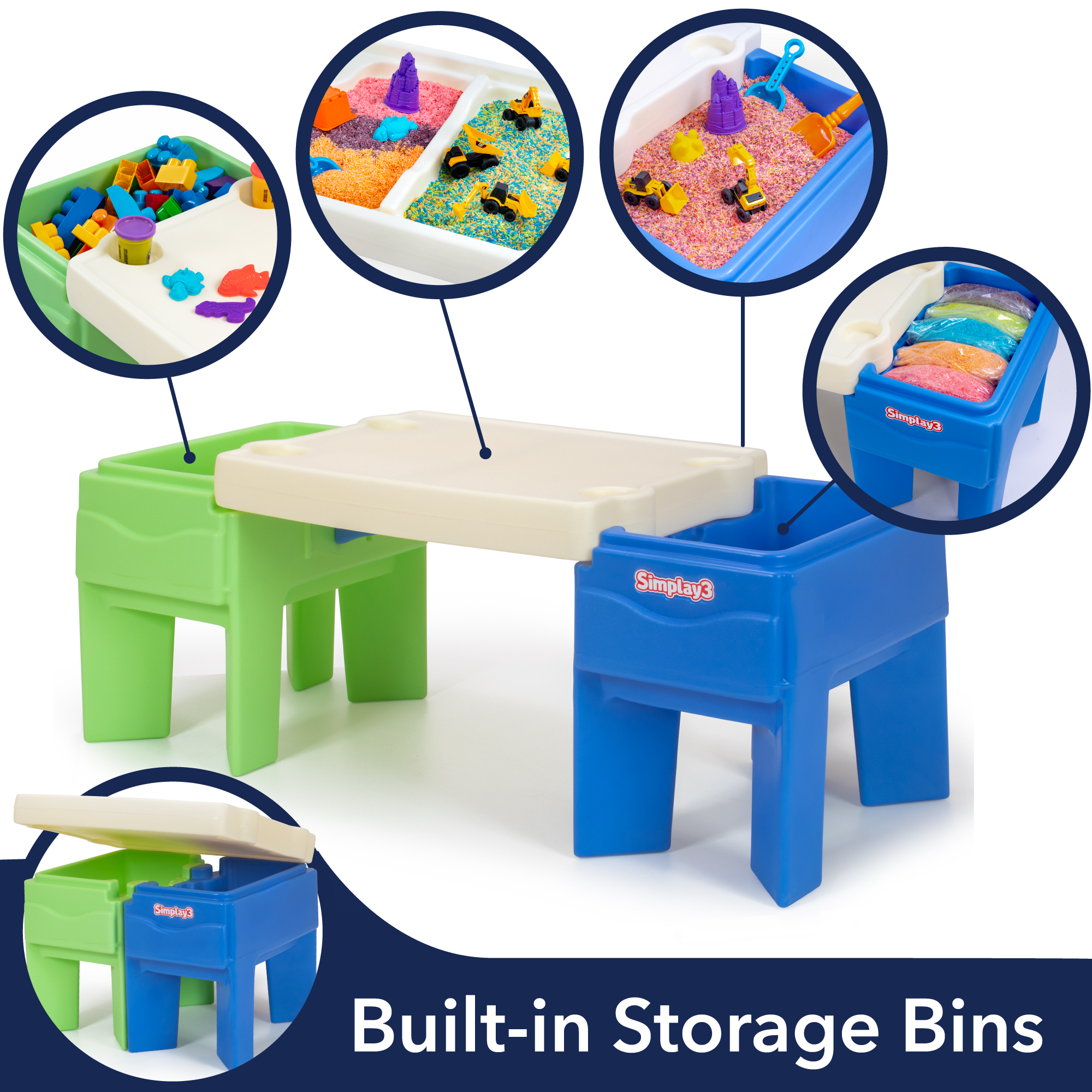
Sensory bins are a simple way to organize taste-safe sensory play activities for toddlers. A sensory bin is typically a container filled with materials that children can scoop, pour, squeeze, or sort while exploring different textures.
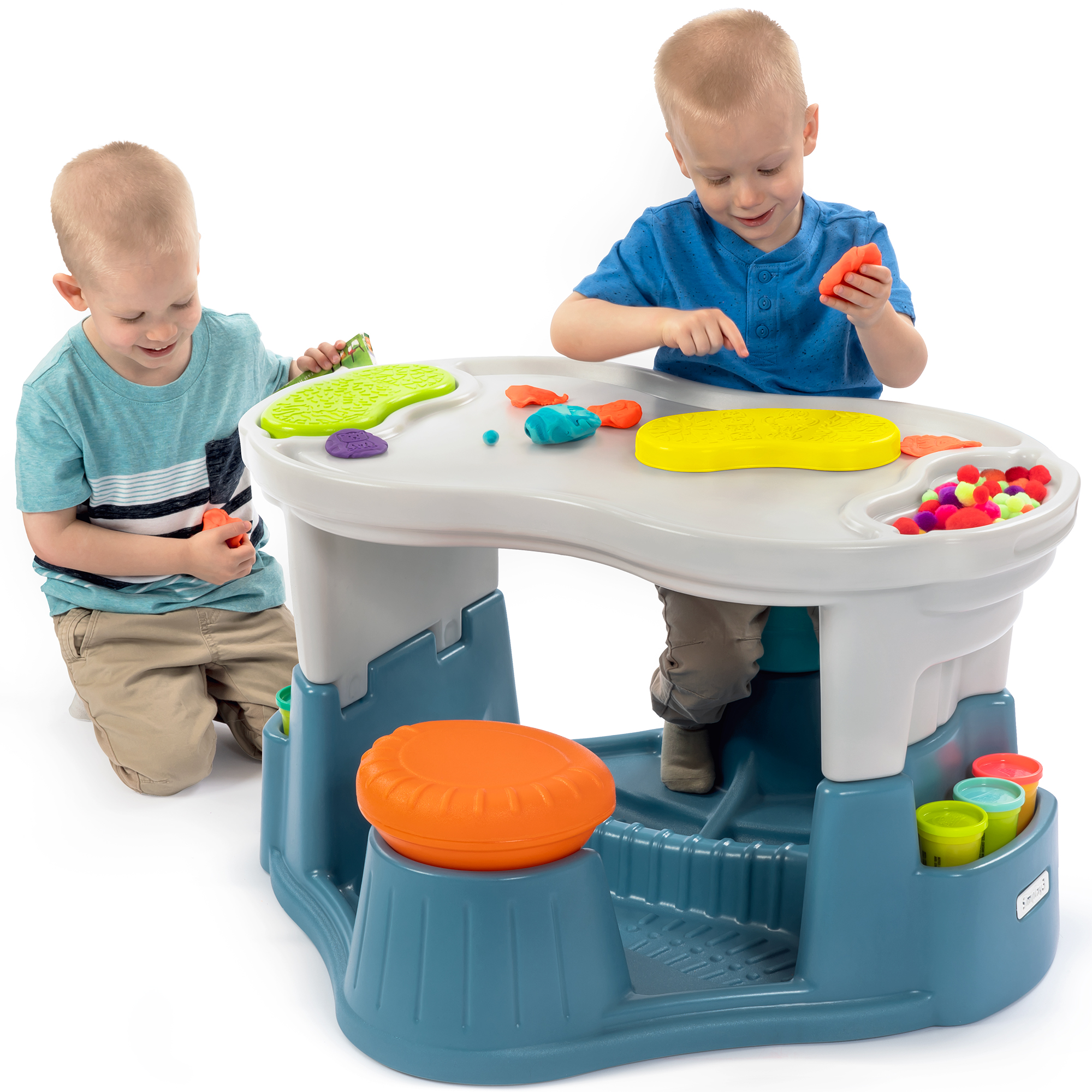
Many taste-safe sensory play materials work well in sensory bins and tables, like the In & Out Activity Table, because they can be easily contained and cleaned up afterward.
Common sensory bin tools include:
- Measuring cups and spoons
- Small bowls or containers
- Scoops or funnels
- Toy animals or vehicles
- Plastic utensils
A large tray, storage bin, or play table can help create a defined play area where children can explore textures and materials during supervised sensory play.
Fun Ideas for Taste Safe Sensory Play for Toddlers
Many taste safe sensory play activities use simple kitchen ingredients that can be turned into DIY taste safe sensory materials. These taste safe materials are often used in sensory bins, trays, or messy play activities where toddlers can explore different textures through scooping, squeezing, and mixing.
1. Moon Dough
Ingredients:
All-purpose flour, 8 cups
Vegetable or coconut oil, 1 cup
Instructions:
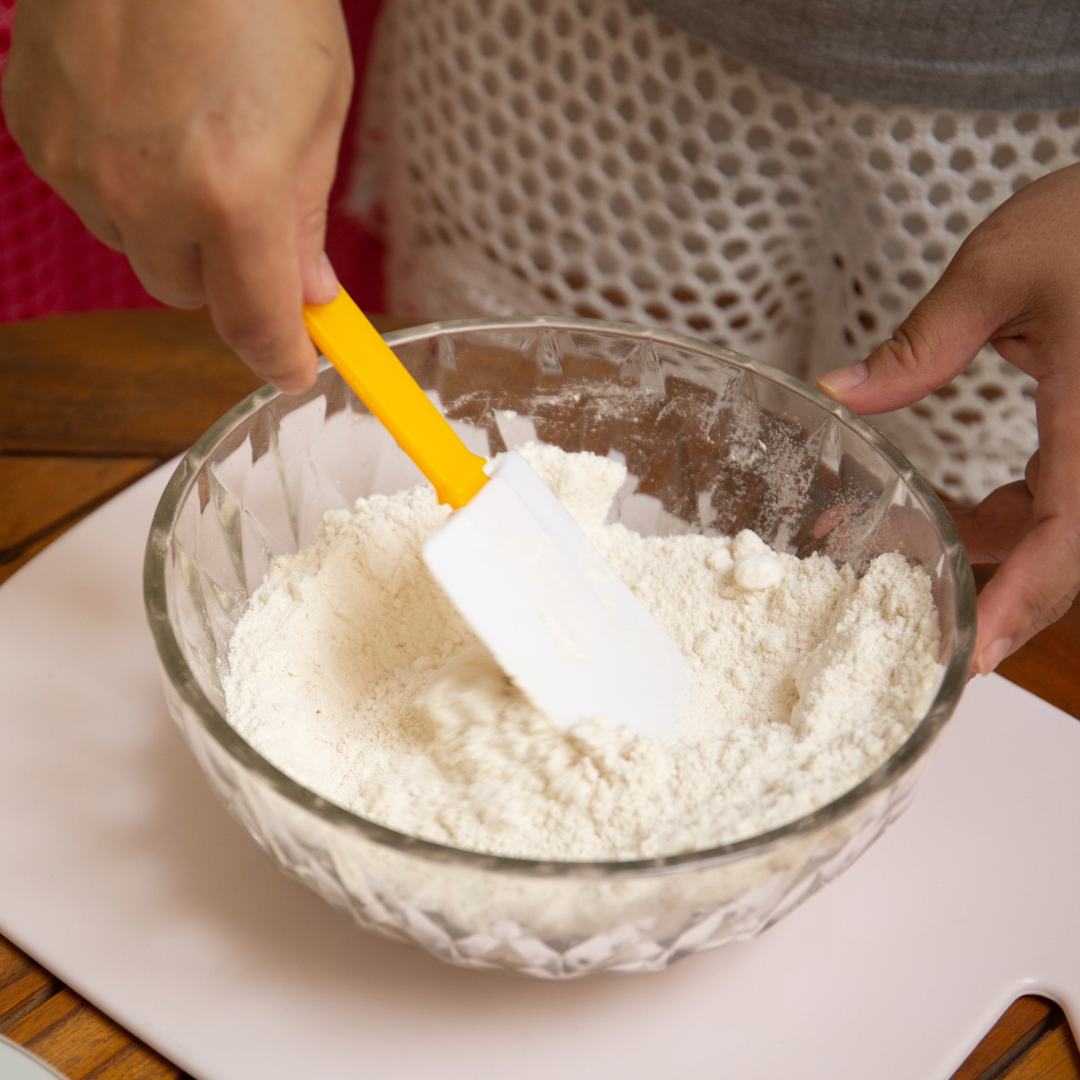
Bake the 8 cups of flour on a baking sheet for 5 minutes at 350 degrees Fahrenheit. Then mix in 1 cup of the oil of your choice to the cooked flour. Now it’s time to play!
2. Classic Sand
Ingredients:
Cheerios
Instructions:
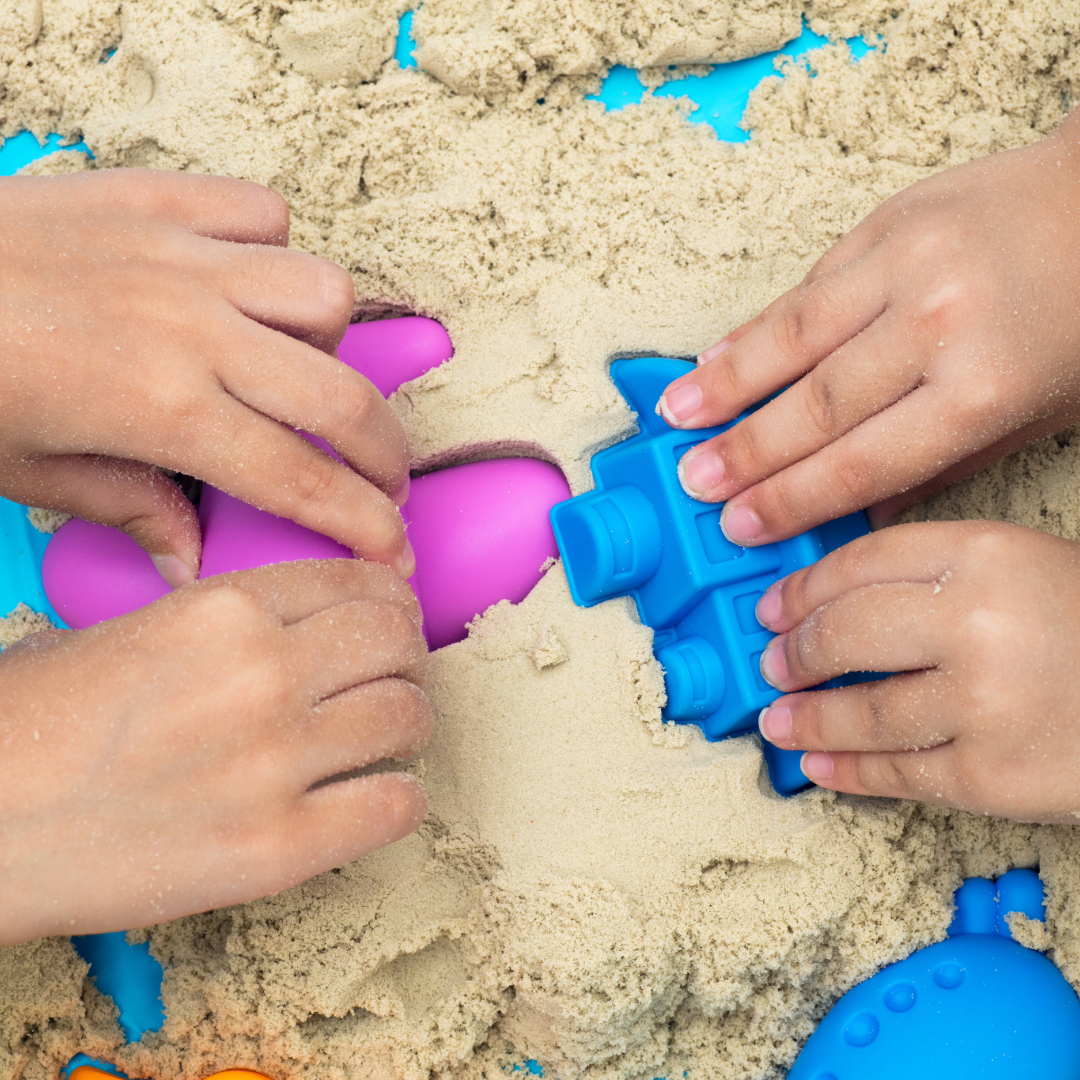
Take a food processor or blender and fill it with Cheerios. Once the Cheerios are crushed down, you are ready to play with your taste safe sand, a simple sensory material often used in sensory bins and messy play activities.
3. Chickpea Foam
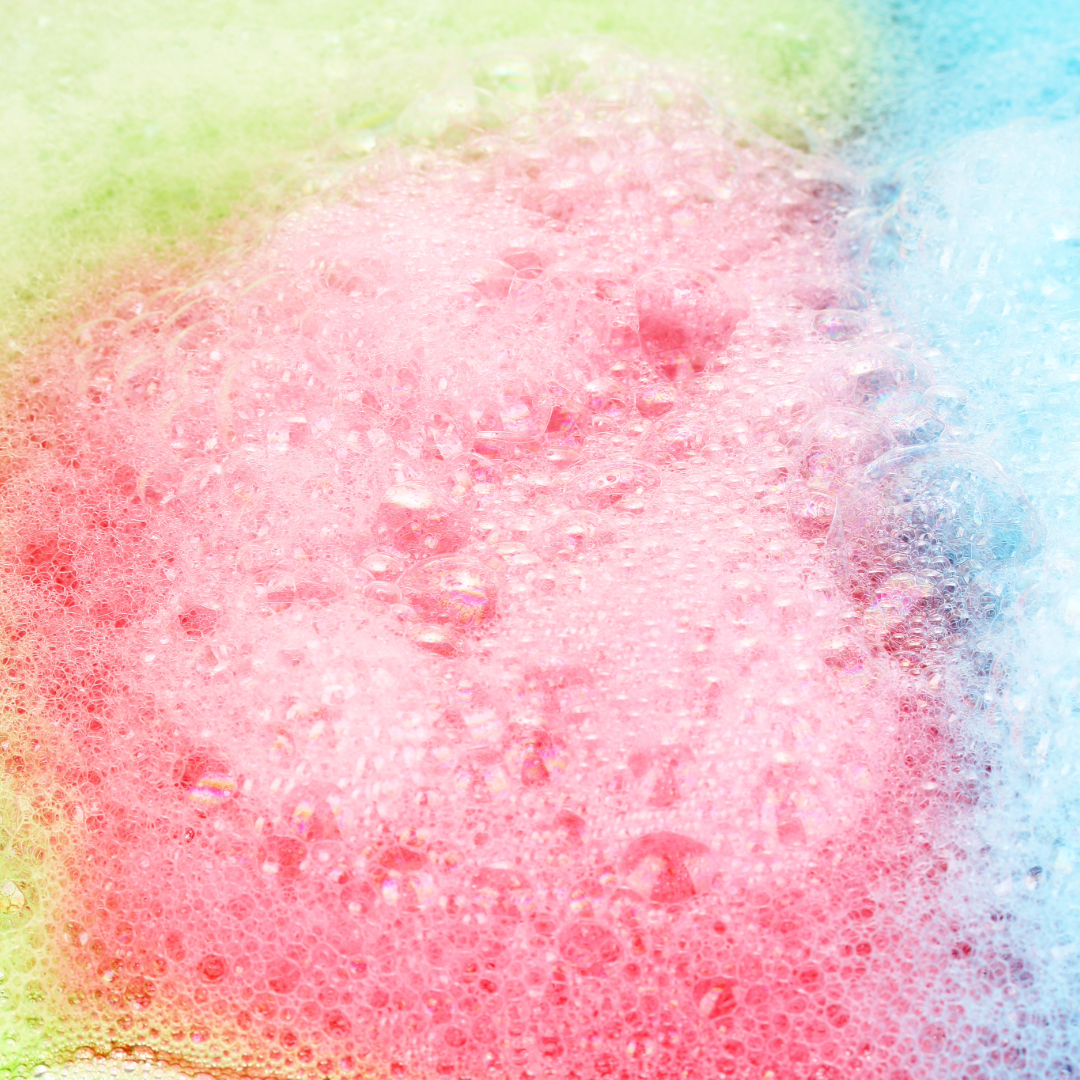
Ingredients:
1 Can of chickpeas
1 tsp of cream of tartar
Instructions:
Take the can of chickpeas and drain the liquid into a bowl. Discard the chickpeas or use them for another recipe. Combine the cream of tartar with the liquid and then mix on high for three minutes. This creates a light taste safe foam that can be used for scooping, swirling, and other sensory play activities. Add food coloring to the mixture before you mix if you want colorful foam.
4. Rainbow Pasta
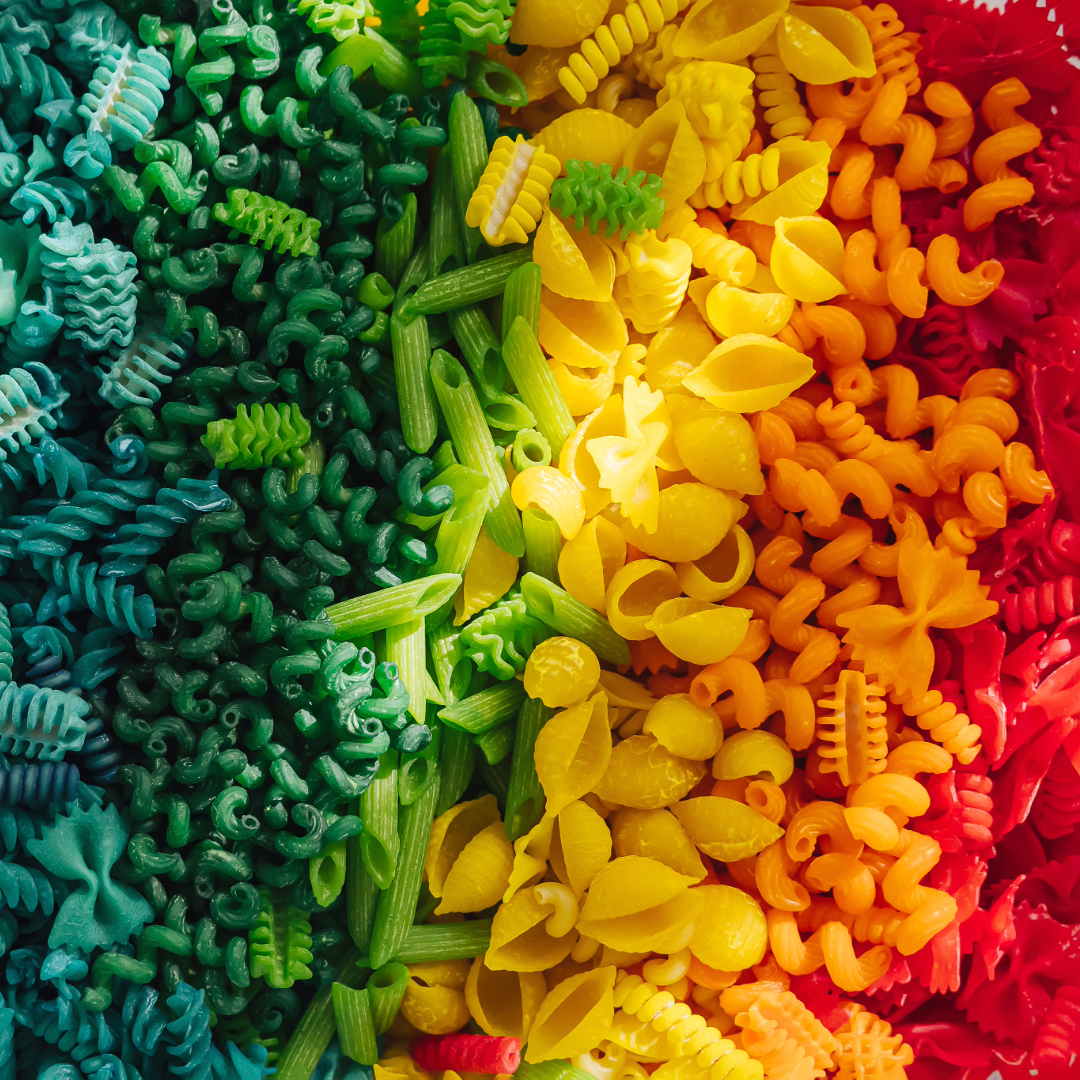
Ingredients:
Box of pasta of your choice
Food coloring
Instructions:
Cook the pasta as listed on the box. Drain pasta and rinse with cold water. While the pasta is still wet, add a couple of drops of food coloring and mix. Let dry for 5 to 10 minutes before playing.
5. Kinetic Sand
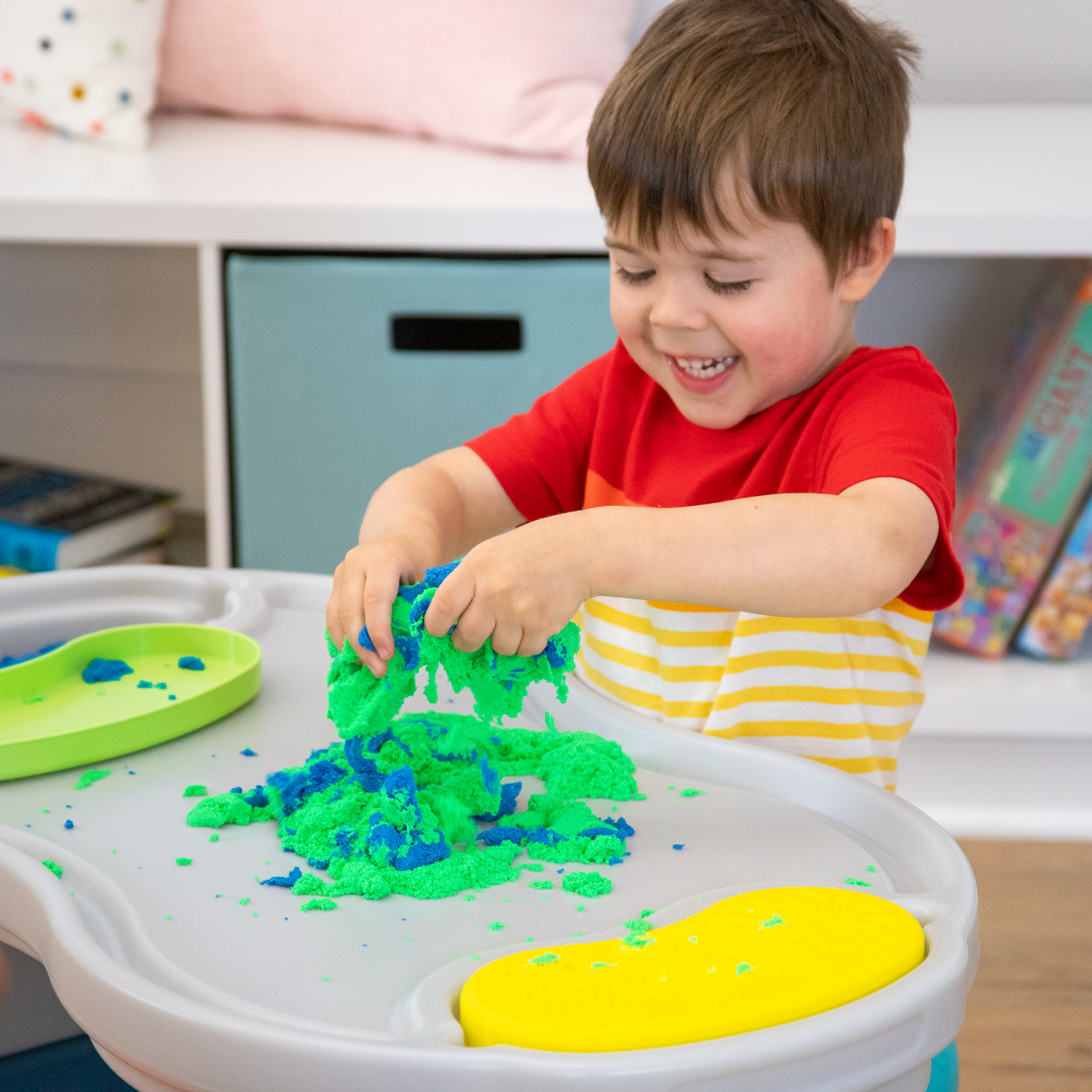
Ingredients:
Baking soda, 1 cup
Sugar, ½ cup
Cornstarch, ½ cup
Cream of tartar, 1 Tbsp
Water, ¼ cup
Food coloring
Instructions:
In a bowl mix together all the dry ingredients. Take the food coloring and mix it with your ¼ cup of water. Combine these two mixtures until the desired texture is reached. Continue adding up to a tablespoon more of water or an additional ⅓ cup more of cornstarch if needed.
6. Chia Seed Slime
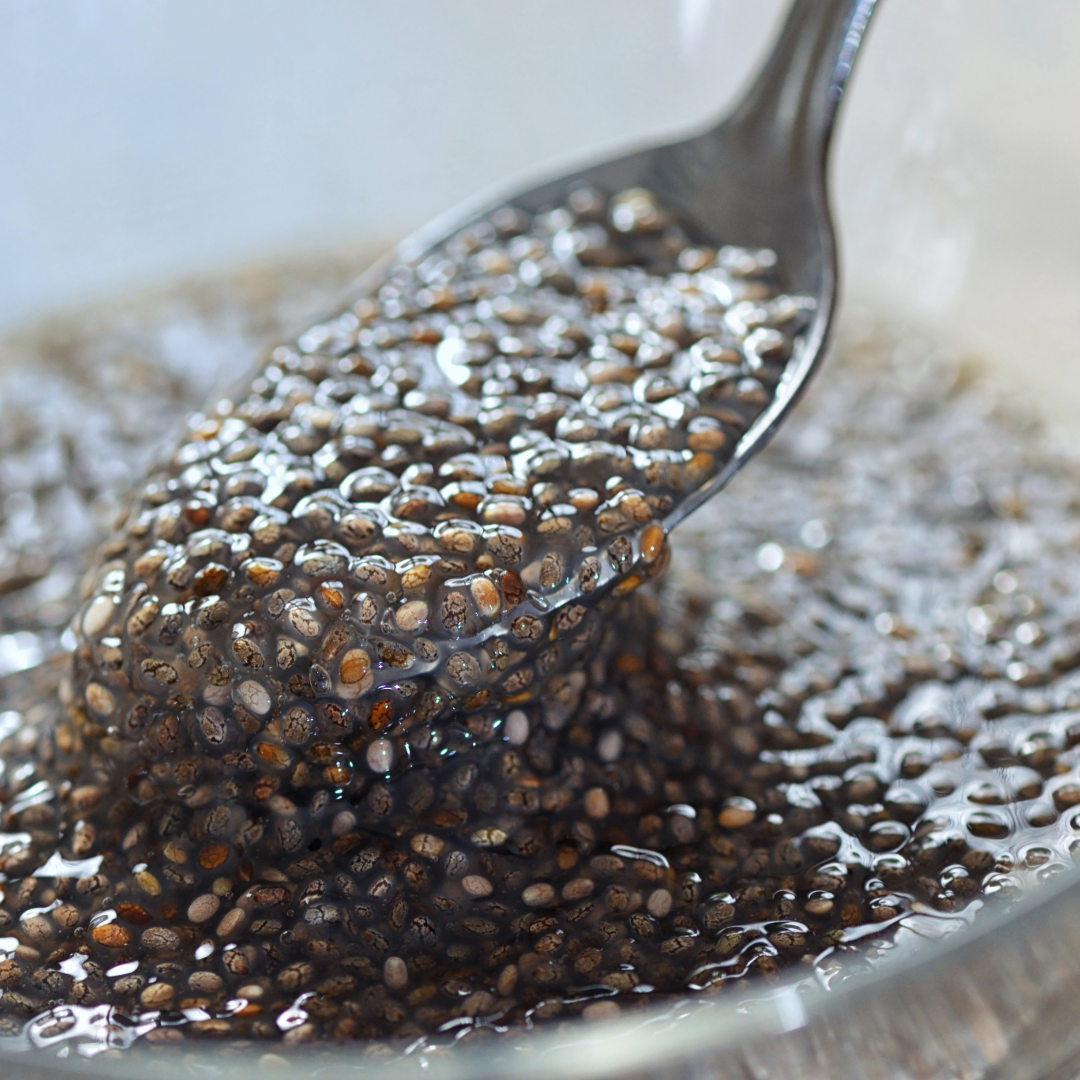
Ingredients:
Chia seeds, ¼ cup
Water, 2 cups
Food coloring
Instructions:
Add together ¼ cup of chia seeds to 2 cups of water. Mix in food coloring of your choice. Repeat for as many colors as you desire. Once complete, place it in the refrigerator overnight, and in the morning it's ready to play with!
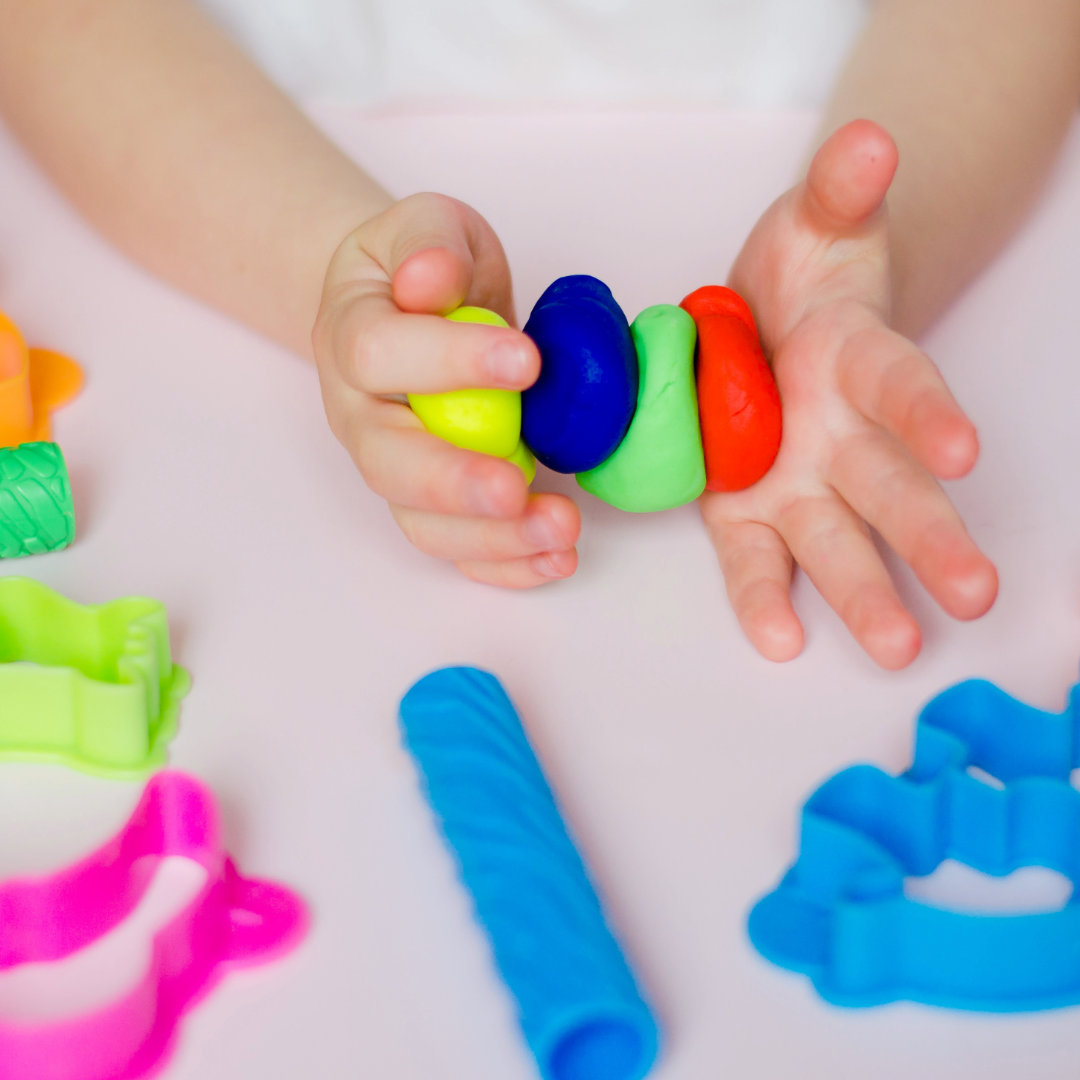
7. Play-Doh
Ingredients:
All-purpose flour, 1 cup
Cream of tartar, 2 tsp
Table salt, ⅓ cup
Vegetable oil or Canola oil, 1 Tbsp
Water, 1 cup
Gel food coloring
Instructions:
In a saucepan combine the flour, cream of tartar, and salt. Add food coloring to your water then combine in your saucepan. Turn the burner on to medium/low heat. Continue stirring until it starts to get a little solid. Once the dough starts to gloop onto your spoon it is done. Remove from your saucepan and let cool before playtime!
Tips for Setting Up Taste-Safe Sensory Play
Many taste-safe sensory activities work well in sensory bins, trays, or play tables that help contain materials during messy play.
Some commonly used tools include:
- Measuring cups and spoons
- Small bowls or containers
- Scoops or funnels
- Toy animals or vehicles
- Plastic utensils
Using a larger play surface or container can help give toddlers more space to explore textures while making cleanup easier.
Frequently Asked Questions About Taste-Safe Sensory Play
What are some sensory play ideas using food?
Food-based (and taste safe) sensory play ideas often use ingredients such as cooked pasta, cereal, gelatin, yogurt, chia seeds, flour-based dough, or whipped chickpea foam. These ingredients provide different textures that children can explore through scooping, squeezing, and mixing.
How do you make edible sensory play materials?
Many taste-safe sensory materials can be created using simple kitchen ingredients like flour, cornstarch, gelatin, cereal, pasta, or yogurt. Combining these ingredients with water, oil, or food coloring creates textures like dough, slime, sand, or foam.
What sensory activities are commonly used for toddlers who mouth objects?
Activities using edible ingredients such as pasta, cereal, gelatin, yogurt, or flour-based dough are often chosen for younger children who explore by mouthing objects. Adult supervision is recommended during any sensory activity.
What are tasting activities for babies or toddlers?
Some sensory play activities allow children to explore food textures such as yogurt, oatmeal, pasta, fruit purees, or gelatin. These activities focus on texture exploration rather than eating the materials.
Take these taste safe sensory play ideas and create engaging sensory experiences on a sensory table, or transform a sand and water table into a sensory play station. These play spaces provide room for multiple children to explore together and are easy to clean with soap and water or a quick rinse with a hose. Many families also use them both indoors and outdoors to support hands-on exploration and repeated play activities.
Simplay3 products are manufactured in the United States and designed for long-term durability, making them a practical option for active play environments.
Explore available options at Simplay3.com to browse American made toys for toddlers and kids.